Melbourne Opera
In Conversation
Melbourne Opera sits down with the artists, directors, and conductors who bring opera to life on the Melbourne stage.
Singers
Directors
Conductors
Designers
Emerging Artists
Directors
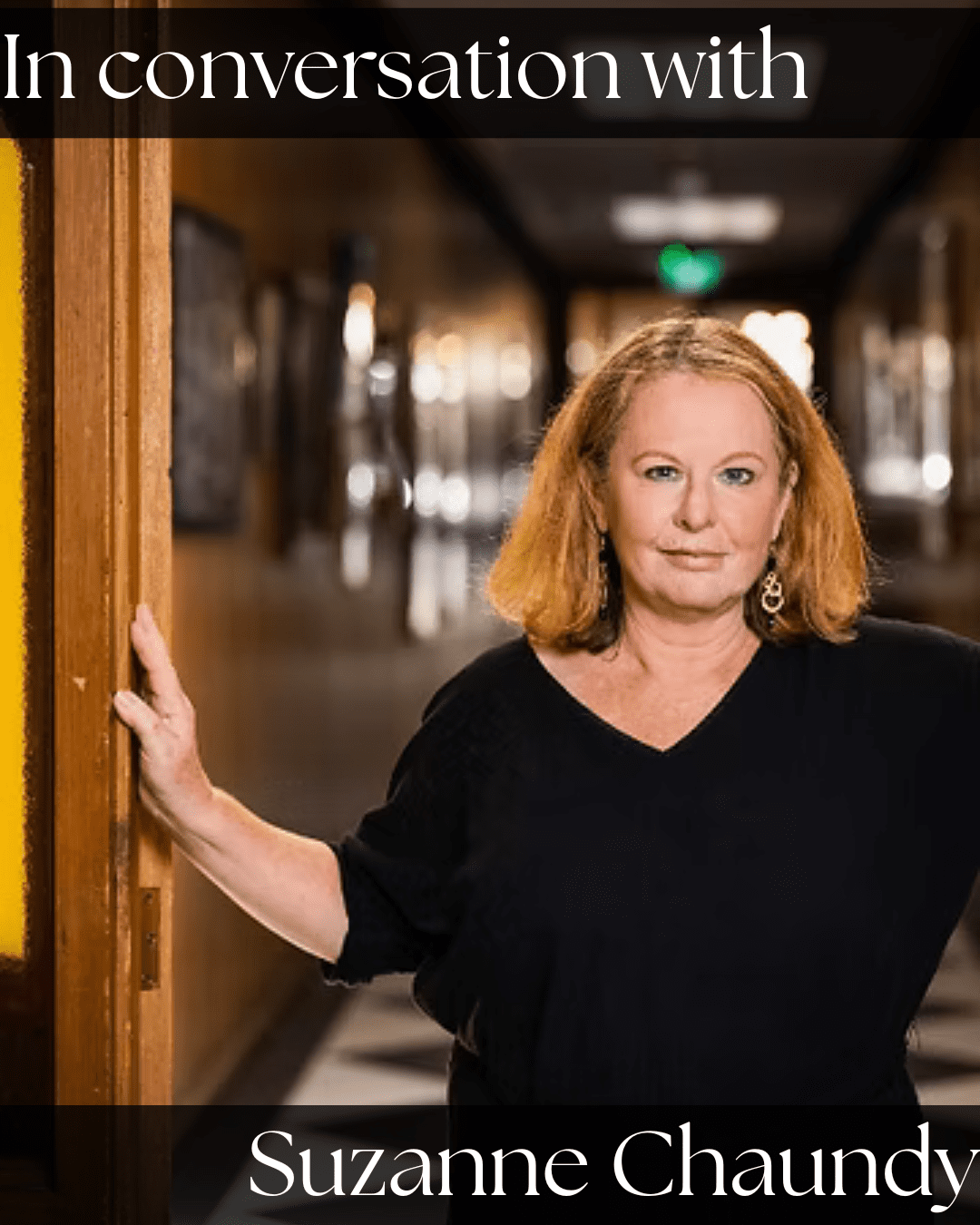
Suzanne Chaundy
Director, Don Giovanni
Trained at NIDA as a director, Suzanne is Australia’s foremost director of the works of Richard Wagner. Her career spans opera, text-based theatre, special events and outdoor spectacle. Suzanne has directed for Melbourne Opera, Lyric Opera of Melbourne, West Australian Opera, Opera Australia, Victorian State Opera, IMG, Red Stitch Actors Theatre, La Mama, Anthill Theatre, Melbourne Theatre Company and Sydney Theatre Company. She is the founder and director of the Richard Divall Emerging Opera Artists Program. Suzanne directed signature productions for Australia’s internationally renowned outdoor performance troupe Strange Fruit. Her Strange Fruit productions have been presented at over 400 festivals and events in Australia, Europe, UK, Asia, Latin America and the USA. Suzanne completed her first Ring Cycle in Bendigo for Melbourne Opera and recently directed Die Meistersinger von Nürnberg at the UNESCO World Heritage Royal Exhibition Building to huge critical and audience acclaim.
March 2026Read →
Singers
Lee Abrahmsen
Donna Anna, Don Giovanni
Soprano Lee Abrahmsen is celebrated for her commanding artistry and exceptional vocal presence. Recognised as one of this generation’s foremost Wagnerian interpreters, she has earned acclaim for Brünnhilde, Isolde, Senta, Elisabeth, Eva and Sieglinde with Melbourne Opera, praised as “a Valkyrie to the hilt… a voice of sheer, gleaming power” by Opera Magazine. Equally distinguished in Italian repertoire, she has sung over 45 principal roles with Opera Australia, Melbourne Opera, Victorian Opera, Sydney Symphony, Melbourne Symphony, as well as major international festivals. A Herald Sun Aria winner, she is founder of Italian Vocal Technique, teaching and preserving bel canto in North Melbourne.
March 2026Read →
Singers
Eleanor Greenwood
Donna Elvira, Don Giovanni
Since completing Melbourne Opera’s Richard Divall Emerging Artists Program, Eleanor Greenwood has built an international career that speaks for itself. Role debuts include Floria Tosca in Tosca in Germany and the title role in Turandot in London. She received critical acclaim for her performances in the Bendigo Ring Cycle, singing Sieglinde and Dritte Norn, and most recently sang as Senta and Gerhilde at a Richard Wagner Opera Gala at the Markgräfliches Opernhaus in Bayreuth. She has appeared with the Thüringen Philharmonie, at the Alte Oper Frankfurt, and the Landestheater Eisenbach, and last year performed alongside legendary soprano Sumi Jo at the Festival of Outback Opera in Queensland.
March 2026Read →
Singers
Henry Choo
Don Ottavio, Don Giovanni
Henry began his professional operatic solo career in 2001, when he premiered the role of Russell in Busking Hugs (Taran Carter) for Opera Australia.
Since graduating from the Young Artist training programs of Opera Queensland and Opera Australia, Henry has gone on to perform over thirty operatic roles in Australia and abroad. Most notable are his world premieres of Aldo/Clunes in Bliss (Brett Dean) for Opera Australia, and Ben in The Bone Feeder (Gareth Farr) for New Zealand Opera, performed respectively at Edinburgh and Auckland International Arts Festivals.
Henry has received multiple Green Room Award nominations, including Best Male Operatic Lead for his portrayal of Martin in The Tender Land (Aaron Copland). He also has the rare distinction of having performed the principal tenor role in all three of Donizetti’s Tudor operas — Anna Bolena, Maria Stuarda, and Roberto Devereux.
March 2026Read →
Singers
Henry Shaw
Leporello, Don Giovanni
Henry Shaw, a Herald Sun Aria prize winner, is a writer, director and singer, who is a graduate of the Melbourne Conservatorium of Music and completed his Masters in Writing for Performance at NIDA. As a performer, Henry is a highly lauded performer in Melbourne’s opera and musical communities. Named the 2025 OperaChaser Emerging Artist of the Year for his title role in BK Opera’s Macbeth, as well as Melbourne Opera’s Meistersinger and Cosi Fan Tutti as the Nightwatchman and Don Alfsonso. He has performed as Figaro (Marriage of Figaro) and received a Green Room nomination for his performance in The Forest Collective’s 2023 premiere of The Sea. Other roles include Captain Phillip Thicknesse (English Eccentrics), Arthur (The Lighthouse), La Podestat (Le docteur Miracle), Colline (Boheme), Jitter (Musical of Musicals: The Musical), Superintendent (The Drowsy Chaperone) and an award-winning performance as Caiaphas in CLOC’s ‘Jesus Christ Superstar’. Recently he has covered the roles of Cecil (Maria Stuarda), Abimalech (Samson & Delilah), and Raimondo (Lucia di Lammermoor) with Melbourne Opera and Sweeney Todd/Judge Turpin (Sweeney Todd) as well as Mr Cave (Eucalyptus) with Victorian Opera. In 2024 he took his podcast “We’ll Get There Together – A Neighbours Retrospective” to the Melbourne International Comedy Festival to sell out audiences.
March 2026Read →
Singers
Rebecca Rashleigh
Zerlina, Don Giovanni
Melbourne-born soprano Rebecca Rashleigh is a graduate of the Victorian College of the Arts and Music and one of Australia’s most versatile and decorated performers. A 2018 Herald Sun Aria winner and 2015 Opera Scholar of the Year, Rebecca has performed with opera companies across Australia in roles spanning Mozart, Verdi, Wagner and beyond — including Susanna, Pamina, Rosina, Liu, Poppea and Woglinde in the Ring Cycle. She has premiered new Australian works, performed as soloist in Mahler, Brahms and Beethoven, and received a Green Room Award nomination for her portrayal of Marzelline in Melbourne Opera’s Fidelio in 2022.
Now she brings all of that craft to Zerlina — a role that is far more than it first appears. We spoke with Rebecca about the woman at the heart of this unlikely sisterhood, and why this opera belongs to the women.
March 2026Read →
Directors
Director, Don Giovanni
Why does Don Giovanni still matter in 2026?
As offenders like Jeffrey Epstein, with his wealthy and powerful clientele, lead the headlines in 2026, it proves that there has never been a time when Il dissoluto punito, ossia Il Don Giovanni has not mattered. This is an opera by Mozart and Da Ponte about the punishment of the degenerate Don. He is presented as some kind of knockabout playboy is when it has mattered least. The abuse of power and class, misogyny, revenge… Sadly, these are not things which are becoming any less relevant as time goes on.
What is at the heart of your interpretation of this production?
At the heart of my production is the growth of female solidarity, including their male allies, as it becomes clear that justice is coming for Don Giovanni. The three women — Donna Elvira, Donna Anna and Zerlina — with their wonderful music and insightful characterisation are reminiscent of the heroines in an Almodóvar film: women in crisis who develop deep friendships. They are women driven by passion, desire and intense emotions, representing unlikely sisterhoods rather than being pitted against one another vying for the affections of this man.
What should audiences expect from this staging?
Expect the unexpected! Leaning into a period look, we will subvert tradition by breaking down the fourth wall and use the Athenaeum Theatre beyond its stage. The set is designed to echo the theatre, blurring the lines between the performance space and the auditorium. There will be a self-aware theatrical exuberance which is where much of the ‘giocoso’ in this ‘dramma giocoso’ lies. Achieving the balance Mozart and Da Ponte set — moving between the story’s gravity and its downright playful, silly sections — will be a fascinating challenge. Our audiences should be moved and on the edge of their seats!
What makes this cast special?
Melbourne Opera has a long tradition of developing local singers. I am absolutely thrilled to have Christopher Tonkin briefly return from Germany, where he is currently singing with the Landestheater Coburg, to sing Don Giovanni. He sang his first Don Giovanni with Melbourne Opera in 2006. Lee Abrahmsen, singing Donna Anna, is another local singer who has developed into one of the country’s leading sopranos; most of her role experience was gained working with Melbourne Opera. Henry Choo is an incredibly experienced Don Ottavio and I am thrilled to have him as part of this Melbourne ensemble cast. As the director of the Richard Divall Program, I am so thrilled to be working with Henry Shaw (Leporello), Eleanor Greenwood (Donna Elvira), Rebecca Rashleigh (Zerlina) and Stephen March (Masetto), all of whom are past members of the Richard Divall Program.
What do you want audiences to leave the theatre thinking about?
The more things change, the more they stay the same. But seriously, about how this is an opera about women — not a man.
If you had to describe this production in one sentence, what would you say?
Alive!
March 2026
Singers
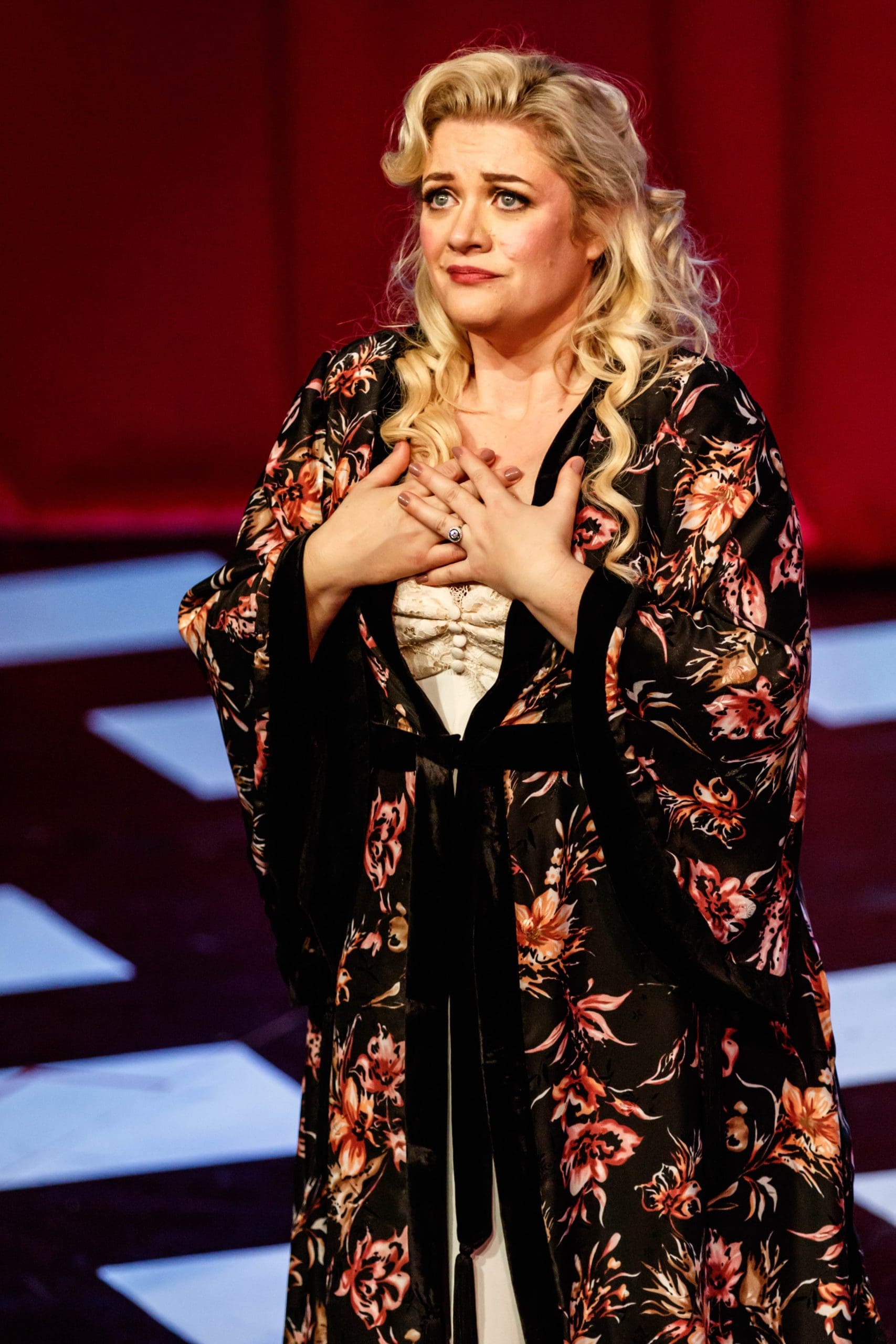
Lee Abrahmsen, Don Giovanni
What makes Donna Anna one of opera’s most complex women?
Donna Anna is often misunderstood — sometimes seen as distant or unfeeling, particularly in her relationship with Don Ottavio. But she’s one of opera’s most layered women: a young noblewoman whose future has been predetermined, suddenly forced to navigate trauma, guilt, and a fierce drive for justice. Her strength lies in how she holds all of that together while trying to honour duty, family, and her newly unsettled sense of identity. Her life is changed forever.
What surprised you most when preparing this role?
I was genuinely surprised by the sheer scale of this role. Vocally, it’s a major undertaking — not because of flashy top notes, but because of the relentless writing. Donna Anna leads every ensemble high above the stave, has two contrasting and notoriously difficult arias, and sings one of Mozart’s longest and most emotionally charged recitatives. Add the psychological weight she carries, and it becomes a role of remarkable stamina, nuance, and depth.
Is Donna Anna driven more by grief, justice, or something else?
Donna Anna is driven by grief and a fierce sense of justice, but underneath that lie two profound traumas. First, the ambiguous assault by Don Giovanni — an encounter Mozart leaves deliberately undefined in the score — and then the brutal murder of her father by the same masked intruder. Those experiences shape everything that follows, making her even more determined to seek the truth and pursue justice for her father.
Why does Don Giovanni still resonate with audiences today?
Don Giovanni resonates today because its characters are unmistakably human. Their desires, flaws, fears, and emotional honesty feel as real now as they did in Mozart’s time. We still recognise people who live these stories — the charmers, the idealists, the wounded, the vengeful. The only element that steps outside reality is the supernatural ending, but even that gives the drama its thrilling sense of reckoning.
What do you hope audiences understand about Donna Anna after seeing this production?
I hope the audience can understand Donna Anna’s plight – that the character has so many complexities as a human being, and many of these have been thrust upon her within hours of each other. That they can somehow feel compassion and empathy for her, having been through two of the worst traumas someone can experience in a lifetime, and they see her not as cold or rigid, but as a woman struggling to stay steady in the wake of such devastation..
Describe Donna Anna in three words.
Fragile. Courageous. Honour-bound.
March 2026
singers
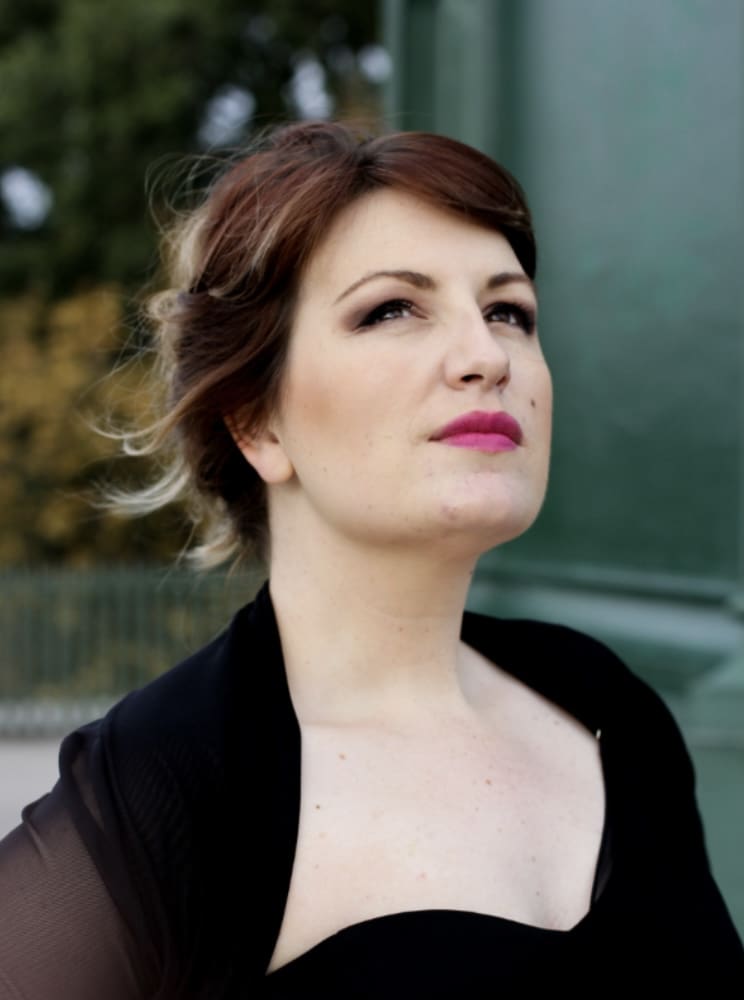
Donna Elvira, Don Giovanni
Is Donna Elvira a victim, a romantic, or the most honest person in the room?
I don’t think she would see herself as a victim, but I think she genuinely believed her relationship would be long lasting. The Don probably had to woo her a lot in order to win her over in the first place, which may not have been the case with many of his other conquests. In one of the plays the opera is based on, Elvira is a nun at first and he woos her out of the convent, into marriage, only by talking to her through the little chat box in the convent door. So that would have taken a lot of effort and she would have most likely thought he was a very good man. Apart from the challenge of winning over a nun, the Don probably did find something unique and valuable in her, potentially her total acceptance of him, maybe her holiness or strong sense of morality, as he probably didn’t understand it, but maybe it was only ever going to last a short time. For her though, a marriage or the idea of marriage would be for life and she is genuinely devastated by him leaving her.
In terms of the question though, it could be possible to say she is all three of those things. Firstly, she is a victim as she has genuinely been abandoned and her rage is rational under the circumstances. Secondly she is sort of romantic as she loves the Don despite his actions, and thirdly she is honest and wants to warn others of his depravity.
What draws you to playing Elvira?
I think she’s a very strong person, with lots of passion, who loves the Don more than she loves herself. She has sincere religious beliefs and so her concern for his damnation is real, and her belief is that he should reform his ways and come back to her. Her self worth doesn’t depend on him, but he wounds her deeply and she wants to stop him from hurting others in the same way. She is a person with large emotions and she is a whole person who can handle difficulties, express her feelings (quite passionately), whereas he can’t express, or doesn’t actually have feelings for others.
Maybe in comparison to her, he is not a fully formed person. He attached himself to her for a while but then returned to seeking fulfilment elsewhere.
What do audiences often misunderstand about her?
She isn’t just an angry, sad, bitter ex. She’s a complex woman who has enough balls to reclaim her right to her husband whether he likes it or not. She won’t give up on him entirely, just because he’s given up on himself, or fallen away from her, even though she is genuinely hurt by what he is doing.
What about the opera feels most personal to you?
A lot about the opera seems authentic and so it seems to click with me. More specifically, Elvira believes in redemption, forgiveness and decisive love and even if the Don rejects her compassion, she still understands in full, the power of those concepts.
How would you describe Elvira’s relationship with Don Giovanni?
For her, the relationship is forever as they are married under God. Even though he may try to leave her, he may betray her and all of those things hurt her immensely, she isn’t going anywhere. She tries with all that she is to pull him back from the abyss of his actions. She questions herself as to why she still cares so much for him despite his actions, but she keeps on caring. I think it’s possible that he is the only man she’s ever been with or loved.
Why do you think audiences still connect to her story?
I mean I’m not sure, but maybe because some men are still exactly the same as they were in Mozart’s time, lol! More seriously though, she’s a complex person, she comes to realise the Don’s flaws but loves him anyway. She’s a woman in love and will do all she can to see the Don redeemed.
If Elvira lived today, what would she be like?
It’s not entirely from ‘today’, but there’s something about Effie White in Dreamgirls that reminds me of Elvira. They both have fierce determination, passion and they both suffer genuine heartbreak when rejected by the man they love. There is a similar defiance in
their reactions that is very human. I can imagine Elvira singing ‘And I am telling you, I’m not going!’
March 2026
Singers
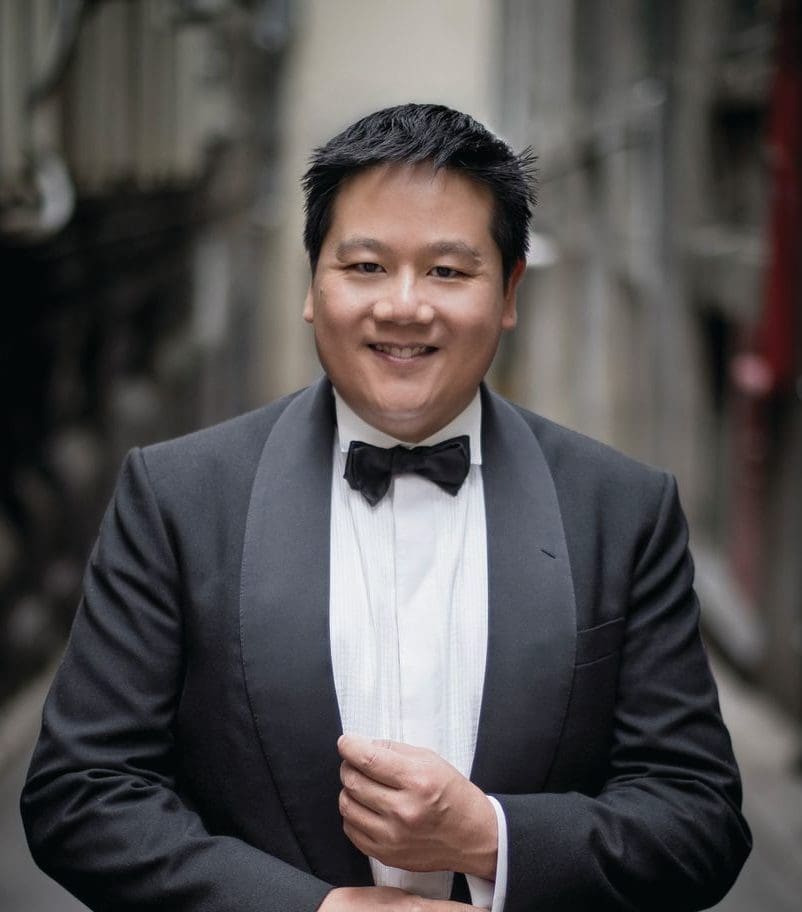
Don Ottavio, Don Giovanni
What makes Don Ottavio one of opera’s most misunderstood roles?
Don Ottavio is both figuratively and literally dragged into Donna Anna’s story. The resulting imbalance (inversion) in status, story-telling and narrative perspective often leads audiences, and some directors, to pay more attention to Anna’s story and less about Ottavio.
Musically, Mozart’s use of “feminine endings” for Ottavio, compared to the boldness of Don Giovanni, also contributes to the perception that Ottavio is weak and passive rather than strong and considered.
Dramatically, just as “one does not simply walk into Mordor”, similarly Ottavio does not simply accuse a fellow nobleman of heinous crimes without irrefutable proof lest he invites unwanted scandal, disgrace and shame to Anna’s good name.
Ottavio is all about doing what is right by Anna – supporting her through her grief, protecting her honour, advocating for her and others, and taking action in seeking out truth and justice – despite her constant rejection of him. There is much more to Ottavio than meets the eye, and his story is worth telling.
What surprised you most when preparing this role?
I first learned the role of Don Ottavio in 2003 and have performed several productions of Don Giovanni since that time. The surprising aspect comes down to the decisions that I make when playing the character, now, when compared to previous interpretations. With age comes real-world wisdom and a better understanding of oneself that helps to guide the choices that I make on stage as I bring my current version of Don Ottavio to life both musically and dramatically.
Don Ottavio is often dismissed as passive — the tenor who stands aside while the women suffer. Do you think that is fair?
Totally unfair, and inaccurate. Don Ottavio is a gentle man who stands for three main things: duty, compassion and love.
Despite his difficulty in accepting that a fellow nobleman could be capable of such heinous crimes, Ottavio supports both Anna and Elvira in their plan to confront Giovanni at his party, as well as subsequent attempts to apprehend Don Giovanni to answer for his crimes. He is the rock upon which Anna clings in her times of grief, whether these moments of grief are genuine or manipulative.
Ottavio continues his support of Anna despite her constant pushback, even while dealing with his own heartbreak when Anna tells him that she “loved” him (yes, past tense).
These are not the actions of a weak and passive character. A lesser man would likely have left Anna to avoid the scandal of her assault. But not Ottavio. He continually and unwaveringly stands by Anna’s side to protect her honour, uncover the truth, and to bring those responsible to justice.
Why does Don Giovanni still resonate with audiences today?
I suspect that there are many reasons that contribute to the opera’s continued resonance with today’s audience. For example, the motivations of the characters from the popular show Ted Lasso are not dissimilar to those of Don Giovanni.
For me, the story of Don Giovanni serves as an allegory to real-world issues where injustice is fought against through advocacy of those in need, by giving people voice, and doing what is right.
What do you hope audiences understand about Don Ottavio after seeing this production?
Don Ottavio is the moral compass of his world and should therefore be embraced rather than rejected. He is steadfast, loyal, kind, considerate, compassionate, and of gentle nature; character traits that exemplify a person of honour and strength. Ottavio’s compassion and kindness should not be mistaken for weakness of character and I hope that audiences are able to see past the superficial to discover the true strength that his character represents within the opera.
The real-world needs more people like Don Ottavio; those who will stand up for what is right, in the support of others, despite the potential of any personal loss or injury to themselves. It’s a privilege and honour to be able to represent these values on stage.
March 2026
Singers
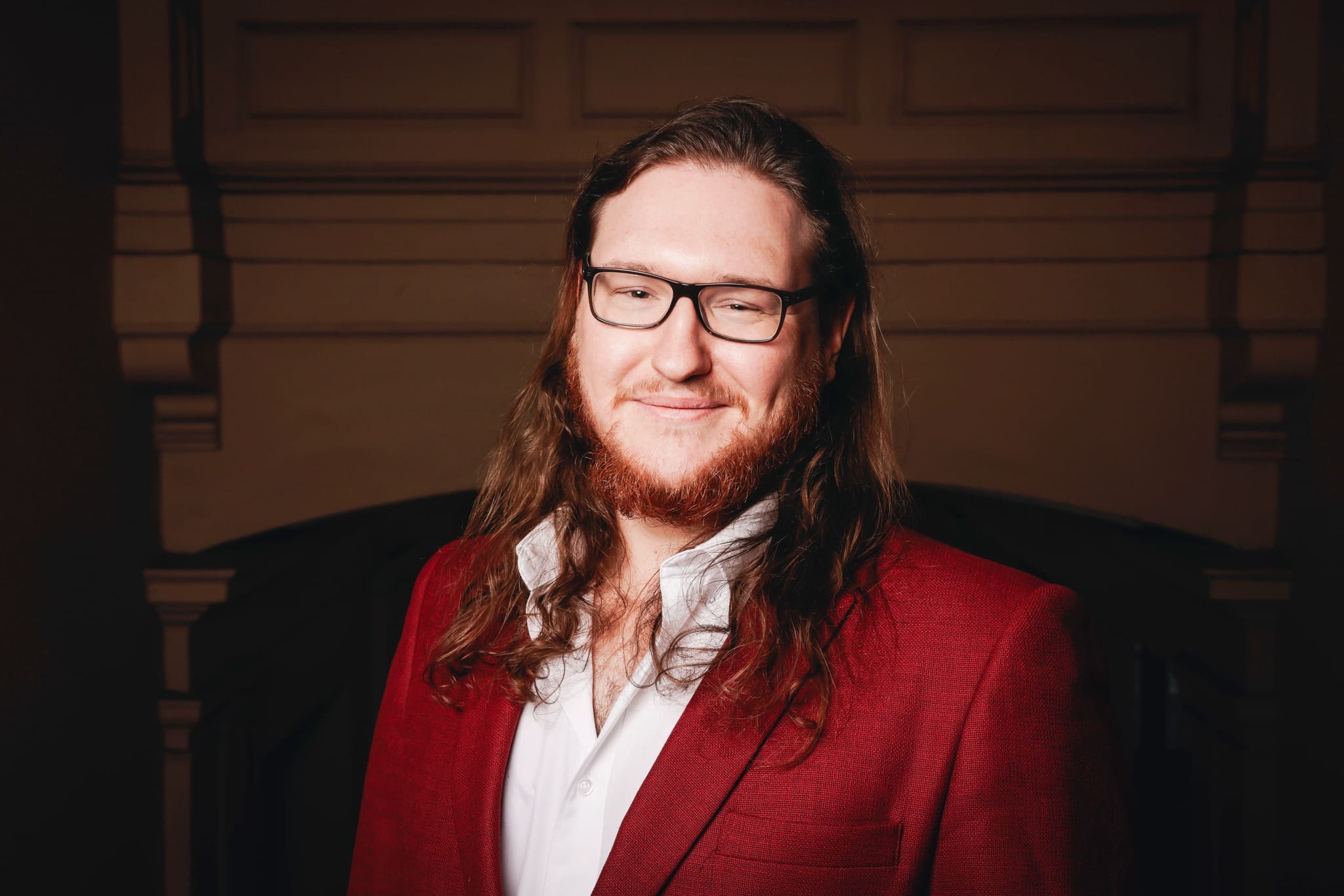
Leporello, Don Giovanni
What makes Leporello one of opera’s most fascinating supporting roles?
It may just be the ego of the actor, but I don’t see Leporello as a supporting character, which may be why he is so interesting. Don Giovanni is the title character, but in terms of an arc, he’s incredibly steadfast to his morals, he dies rather than change. Leporello opens the show telling the audience he wants to be a master, not a servant, spends the whole show complaining about following Don G around while enabling his bad behaviour, and then is traumatised at the end when his boss gets dragged to hell. His final lines speak of wanting to go into town and find a new master, completely resigned to his current station in life. Leporello is the character who has the most change, a cautionary tale to the audience of enabling the powerful to the exclusion of all others.
Interestingly, in the finale Leporello aligns himself with Zerlina and Masetto, seemingly assigned back to his original position. His talk of aspiration to a higher station is empty, perhaps a mirror of the empty morals displayed by Don Giovanni. Mozart perhaps was not as progressive in terms of class consciousness as we are today, as the lesson learned is to not reach above one’s natural place in the social order. But in that simplicity he reveals a truth about enabling a world of others instead of being true to ourselves. Some may aspire to be Jeff Bezos or Elon Musk, but others would rather them be dragged to hell.
What surprised you most when preparing this role?
It’s all in Italian! Who knew!
The Catalogue Aria is one of Mozart’s most famous set pieces and one of the darkest. What is it like to perform it, and what does it actually tell us about Leporello?
It’s interesting, because there is an element of musical voyeurism to the entire piece. Usually a character is singing about what they want, what they feel, or who they are, but here Leporello sings of his boss’s achievements almost as if they were his own. Don Giovanni consumes Leporello’s own identity, to the extent that Leporello’s sense of pride is in another’s achievements. I use the term achievements with some flexibility, “to assault one woman is a tragedy, 1003 is a statistic,” to misquote Joseph Stalin (itself already a misattribution).
In the aria, Leporello sees no issue in the thousands of women on the list, it’s all a game and sport to feed the appetite of his monstrous master. At this point it stops being something that Leporello or Don Giovanni seem to mine any joy from; it’s just the life that they both live, although the Don seems more committed to his crimes than Leporello is. In the aria, Leporello is revelatory in the dehumanisation of women, reducing them to bodies and hair, thinking it’s all very funny that Donna Elvira is so appalled by his revelations. I hope to bring at least some of Elvira’s disgust to the audience, if they’re still completely on board with Leporello by the end of the aria, something has gone terribly wrong.
You came through Melbourne Opera’s Richard Divall Program and now you’re back on the Athenaeum stage in a principal role. What does that journey mean to you?
Much like Leporello, I know my place in the social standing. I may be amongst giants onstage, but I remain a lowly peasant. I like to take each production as it comes, so while my time in the program was preparing me for main stage productions, I don’t see a difference in the job that I’m doing whether that’s in a smaller theatre for a handful of people or a main stage. I was once in a play where some nights the people on stage outnumbered the audience members, and it was a two-handed show! I think it was some of my best work. I think every show I do is my best work. Before you ask, yes, this will also be my best work.
Why does Don Giovanni still resonate with audiences today?
We like seeing a monster be monstrous, as it’s not acceptable in our day to day lives. He lies, cheats, and steals and runs away from consequence. Who wouldn’t want that? But we still have the moral catharsis of seeing him murdered by the end, so balance is restored to the world and we can all breathe a sigh of relief knowing that bad people always get what’s coming to them and are never rewarded. Who’s the president right now again?
What do you hope audiences understand about Leporello after seeing this production?
He’s a bad guy. Funny, maybe, but definitely a
bad guy. He’s the type of person that hides behind a more powerful figure and forfeits his morality to an easy subservience. Don’t get me
wrong, I aim to be as fun and exciting to watch as I can be, but the audience should walk away thinking Leporello is a fairly pathetic character.
Describe Leporello in three words.
Spineless. Brown-nosing. Sycophant.
March 2026
Singers
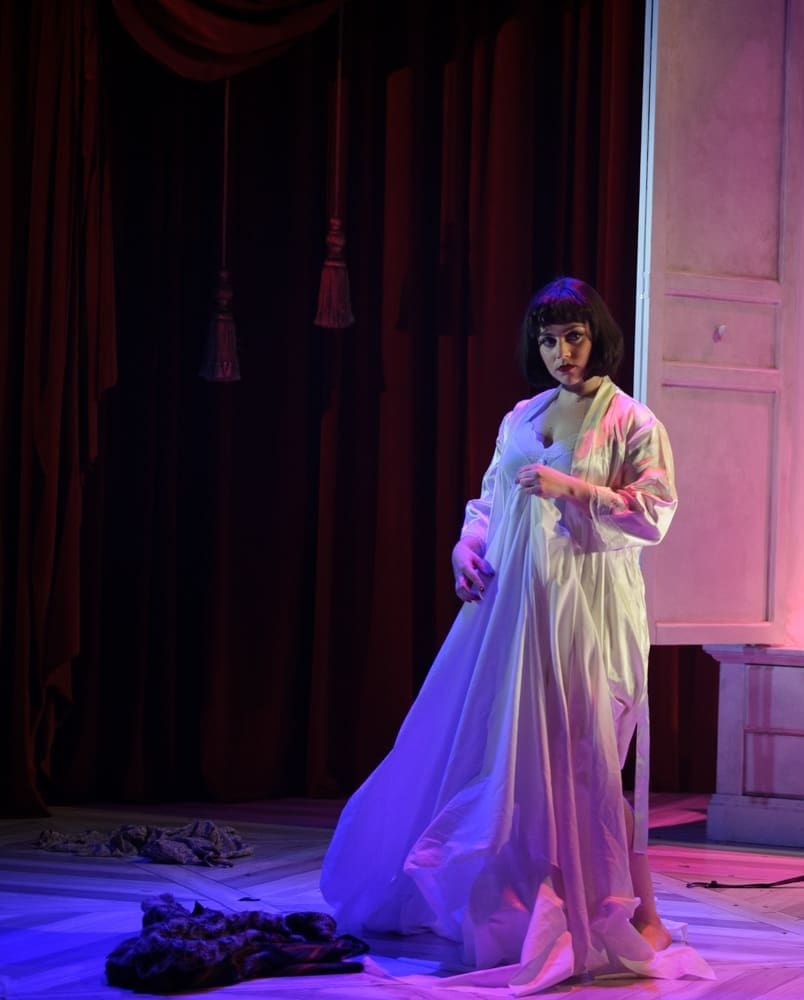
Zerlina, Don Giovanni
Is Zerlina as innocent as she first appears?
She’s a bit cheeky, but I wouldn’t think of her as sinful or a seductress. She’s a typical village girl who is practical and knows how to wrap her fiancé around her finger.
What makes her essential to the story?
She allows the audience to see how Don Giovanni works his craft. With the other ladies, all their encounters happened in the past or off stage. She also brings a point of difference — she’s a commoner in a world of nobility.
Suzanne has described these women as “unlikely sisterhoods” — what does that mean to you in terms of how Zerlina relates to Donna Anna and Donna Elvira?
A sense of Community, shared trauma and the strength in her resilience to pick yourself back up.
How would you describe her relationship with Masetto?
She genuinely loves him and he is her best friend. But I think she’s more of a romantic, and maybe there’s a part of her that Masetto doesn’t get, which is why she’s drawn to Don Giovanni.
What do you want audiences to understand about Zerlina by the end of the night?
That she has a big heart and cares deeply for Masetto, despite how things start off. Also that she is one hell of a resilient powerhouse. I mean, she ends Act 1 being sexually assaulted by Don Giovanni and then comes into Act 2 acting like nothing has happened. In fact, she ends up seeking revenge for what he did to Masetto, not herself.
You came through the Richard Divall Emerging Artists Program with Melbourne Opera — what did that experience mean for your development as a singer, and what does it feel like to return to the company in a role like Zerlina?
Getting the opportunity for ongoing work with an opera company and in providing consistent vocal coachings. During the program I was also able to get language lessons, cover roles and even perform small roles with my largest being Marzelline in Fidelio. Coming back to perform Zerlina has been really lovely and a kind of full circle moment.
Describe Zerlina in three words.
Playful, Resilient, Rational.
March 2026